
logo

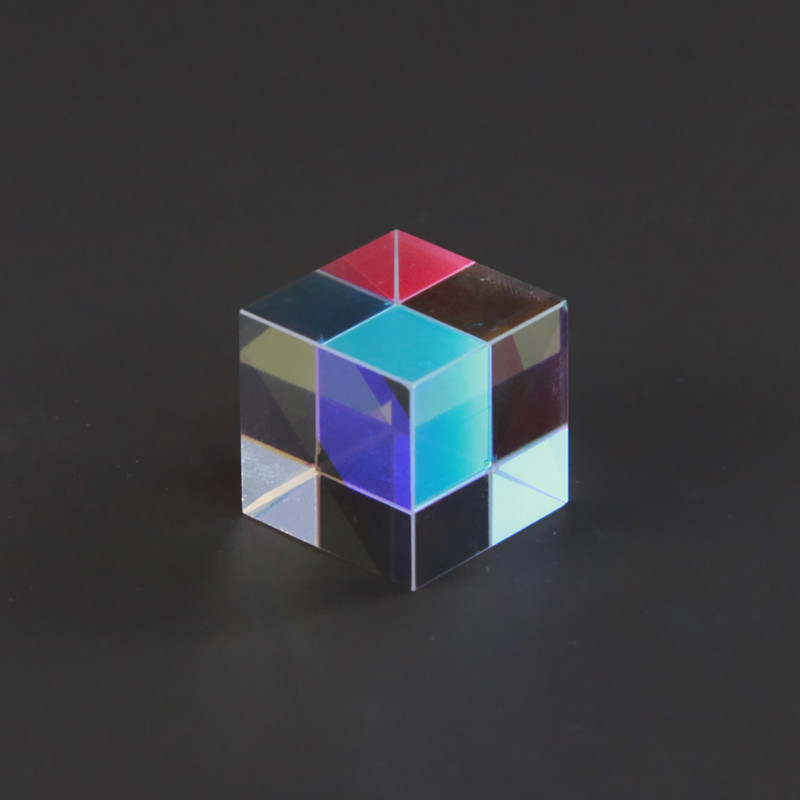
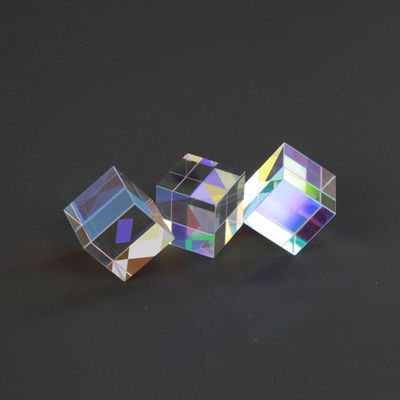
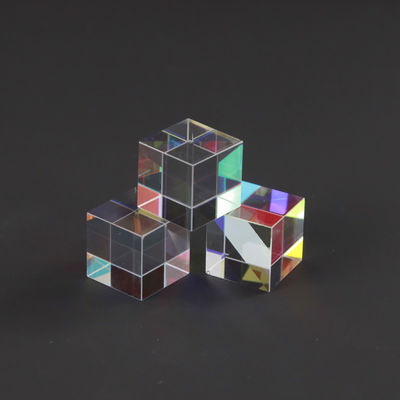
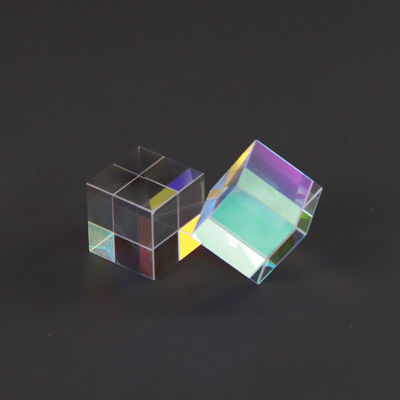
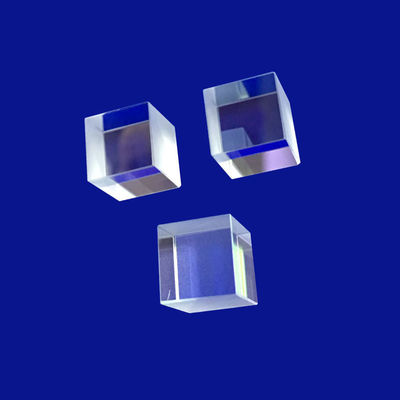
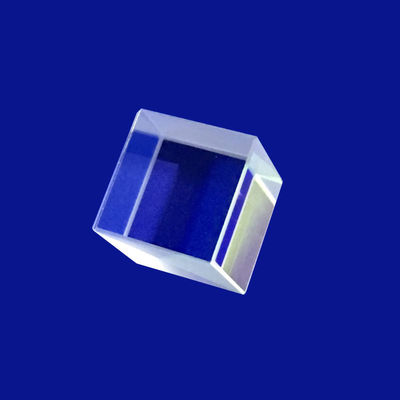
K9 BK7 Rectangular Right Angle Optical Lens Design

Product Specification
Place of Origin: China
Brand Name: Advance
Certification: ROHS\Reach
Model Number: as requirements
Minimum Order Quantity: 1
Price: $0.2~$100
Payment Terms: T/T&L/C
Supply Ability: 1000k/per month
Product Details
Highlight:

Right Angle Optical Lens Design

,

Rectangular Optical Lens Design

,

BK7 right rectangular prism

Material: K9 BK7 / Optical Glass
Customized Support: OEM, ODM
Size: Customer-made Rectangular
Dimension Tolerance: +/-0.01mm
Application Area: Right Angle Optical Lens Design
Angle Tolerance: 3"~2'
Shape: Rectangular
Focal Length Tolerance: +/-1%
Product Description
K9 BK7 Rectangular Right Angle Optical Lens Design
In specialized laser instrumentation and industrial line-scan vision systems, routing optical paths through tight, non-square spatial envelopes requires targeted geometric profiles. Our K9 BK7 Rectangular Right Angle Optical Lens Design services address this optomechanical requirement directly. By utilizing highly homogeneous borosilicate crown glass (K9 / BK7), we engineer a specialized Rectangular Right Angle geometry that provides consistent 90° or 180° beam deflection. Unlike standard square prisms, the elongated rectangular aperture is custom-optimized to accommodate linear sheet lasers, anamorphic beam profiles, and wide-format sensor arrays, minimizing excessive bulk weight and lowering system integration costs.
The primary objective within any K9 BK7 Rectangular Right Angle structural configuration is ensuring absolute angular fidelity across the entire elongated face. Minor micro-wedging or physical twist along the length of a Rectangular glass block can induce wavefront aberrations and severe pixel-registry distortion on line-scan sensors. To eliminate this distortion, our Optical Lens Design protocol enforces strict single-point goniometric controls during production. Combined with multi-layer broadband anti-reflection (BBAR) coatings on the entrance and exit apertures, these prisms provide up to 99.5% transmission efficiency, making them an excellent choice for medical imaging devices, defense rangefinders, and automated factory inspection tracks.
Technical Specifications
The engineering matrix below outlines our standard production thresholds and micro-tolerance capabilities for rectangular right-angle configurations.
Technical Parameter Standard Engineering Range / Capability Premium Metrology Grade Limits
Product Framework K9 BK7 Rectangular Right Angle Optical Lens Design K9 BK7 Rectangular Right Angle Optical Lens Design
Substrate Grade Options CDGM K9 (Grade A) / Schott N-BK7 High-Homogeneity Grade H4 (Schott)
Dimensional Profiles Width: 2mm to 80mm; Length up to 300mm Customized micro-optics down to 1.0mm
Dimensional Tolerances ±0.05 mm (Standard precision machining) Up to ±0.01 mm (Micro-optical alignment grade)
Angular Precision (α) ≤ 1 arc minute angular error ≤ 5 arc seconds (Elite interferometer grade)
Surface Flatness (ΔW) ≤ λ/4 @ 632.8 nm over clear aperture ≤ λ/10 @ 632.8 nm (Laser grade)
Surface Finish (MIL-Spec) 40/20 Scratch-Dig compliance 10/5 Scratch-Dig (High-power laser compliant)
Refractive Index (nd) 1.5168 @ 587.6 nm Pycnometer verified batch homogeneity
Abbe Number (νd) 64.17 (Low chromatic dispersion index) Strict batch consistency matching
Coating Availability Uncoated / Metallic Al-Ag-Au / BBAR Films High-Damage-Threshold V-Coatings
Parameter Specification
Materials BK7 or other optical glass, quartz, sapphire, Ge, Si, ZnSe, CaF2 etc
Length 3~100mm
Width 3~100mm
Height 3~100mm
Length tolerance +/-0.01mm
Width tolerance +/-0.01mm
Height tolerance +/-0.01mm
Angle tolerance 3"~2'
Irregularity ΔN=0.1~0.5
Surface accuracy N=1~3
Surface quality 10/5~60/40
Coating Upon request
Application area Imaging, Lighting, Laser etc
Key Advantages
Specifying a K9 BK7 Rectangular Right Angle structure provides decisive physical and functional advantages over classic cube prisms within multi-axis optical trains:
  • Optimized Line-Scan Profiles: The elongated Rectangular clear aperture perfectly maps to linear CCD/CMOS cameras and laser sheet applications, reducing unnecessary glass volume and lightening the total payload mass of mobile sensor heads.
  • Total Internal Reflection (TIR) Capability: When light enters normal to an unpolished leg face, it hits the internal hypotenuse at 45°. Because this exceeds the critical angle for BK7 glass (≈41.2°), the prism achieves efficient Total Internal Reflection without needing an expensive reflective metallic coating.
  • Streamlined Optomechanical Mounting: The flat, perpendicular layout of the Right Angle sides provides highly stable datum planes for reference mounting, which significantly lowers the risk of structural alignment drift during sudden mechanical shock or vibration.
Primary System Integration Fields
  • Industrial Line Scan Machine Vision: Used as a low-profile turning mirror assembly to route linear backlight or laser illumination profiles onto high-speed conveyor sorting networks.
  • Laser Distance Meters & Ranging Pods: Functioning as a high-precision 90° beam bending block inside handheld tools and -grade laser rangefinder assemblies.
  • Bargraphic Projection & Optical Scanning: Integrated into logistics barcode scanners and commercial laser projectors to sweep a wide horizontal area using a minimal mechanical envelope.
  • Spectroscopic Calibration Bench Arrays: Custom Optical Lens Design blocks utilized to fold internal optical lines, shrinking the physical footprint of laboratory spectrophotometers.
Frequently Asked Questions
Q1: What makes K9 or BK7 glass the global benchmark for rectangular right-angle optical lens components?
A: K9 / BK7 (Borosilicate Crown glass) is the most widely adopted optical crystal for visible to near-infrared applications (350 nm - 2.0 μm) due to its uniform chemical composition. It features extremely low bubble and inclusion counts, superb internal transmission (>99.2% per cm at 550 nm), and excellent mechanical durability against everyday cleaning and mounting forces. From an Optical Lens Design perspective, its highly predictable refractive index and low thermal expansion rate make it a dependable choice for large-scale, high-precision commercial and manufacturing.
Q2: How does a Rectangular format impact the internal stresses of a Right Angle prism during manufacturing?
A: Polishing an elongated Rectangular block introduces asymmetrical polishing pressures that can result in edge roll-off or "rainbowing" across the long axis of the glass. To counteract this material stress, our facility uses specialized double-sided pitch lapping machines and continuous monitoring setups. This enables us to maintain an exceptional surface flatness (≤ λ/4) and keep angular pyramid errors below 15 arc seconds along the entire extended edge of the Right Angle prism, ensuring uniform transmission across the entire linear beam profile.
Q3: Can these right-angle prisms be configured to operate as a retroreflector (180-degree turn)?
A: Yes, absolutely. While most commonly utilized for a 90° light turn by entering through a leg face, you can input a beam normal to the hypotenuse face instead. The light will hit both leg faces internally via total internal reflection and emerge parallel to the original input vector, executing a precise 180° turn. This versatile dual-use behavior is highly valued by systems engineers looking to build robust laser retroreflectors or custom interferometry delay lines with a clean, stable footprint.
Q4: What coatings are recommended to maximize the lifespan and efficiency of the prism?
A: The optimal coating depends entirely on your light path layout. If your Optical Lens Design relies on Total Internal Reflection (TIR), the internal hypotenuse can remain uncoated, but we strongly suggest applying a Broadband Anti-Reflection (BBAR) coating to the entrance and exit leg faces to reduce single-surface reflection loss from 4% down to under 0.5%. However, if your light path hits the internal hypotenuse at an angle shallower than 41.2°, TIR will fail. In those setups, we deposit a highly reflective protected silver (Ag) or enhanced aluminum (Al) film onto the outer back hypotenuse to ensure uniform 90° reflectivity across the target waveband.
Related Products
Contact Our Experts And Get A Free Consultation!

Our mission is to offer "High Quality" & "Good Service" & "Fast Delivery" to help our clients to gain more profits.